PM Modi at SCO: Unite Against Terror Ecosystem
Prime Minister Narendra Modi on Tuesday called on the Shanghai Cooperation Organisation to work unitedly to dismantle the entire ecosystem of terrorism. Addressing the 26th SCO Summit in Bishkek, he stressed that there can be no place for double standards in dealing with the threat and that terrorism must never be treated as a strategic asset by any country.
A Clear Call Against Selective Approaches
Speaking at the gathering of SCO leaders, the Prime Minister described terrorism as a grave challenge to all of humanity. He argued that the response cannot remain limited to a cycle of action and reaction. Instead, member states must target the full support system that allows terrorism to survive and spread.
“We must dismantle the entire ecosystem of terrorism—its financing, recruitment, radicalisation and safe havens,” he said. “We must speak in one voice that there can be no place for double standards on this serious issue.”
The remarks were delivered in the presence of other SCO leaders, including Pakistan Prime Minister Shehbaz Sharif, Chinese President Xi Jinping, Russian President Vladimir Putin and leaders from Iran, Belarus, Kazakhstan, Uzbekistan, Tajikistan and the host nation Kyrgyzstan.
Terrorism Cannot Be a Strategic Asset
Without naming any country, Modi delivered a firm message to those who use terrorism as an instrument of policy or provide shelter and support to terrorists. Such countries, he said, must be told clearly that terrorism cannot serve as a strategic asset for anyone.
This position reflects India’s long-standing emphasis on the need for consistent international standards. New Delhi has repeatedly argued that selective condemnation or tolerance of certain groups undermines collective security. By placing the issue before the full SCO membership, the Prime Minister sought to reinforce the principle that the fight against terrorism requires uniformity of approach.
Three Pillars of India’s SCO Vision
Modi outlined India’s approach to the organisation through three interconnected pillars: Security, Connectivity and Opportunity. Peace and security form the foundation. Without a stable environment free from the threat of terrorism and related transnational crimes, efforts at greater economic integration and people-to-people exchange cannot succeed.
On connectivity, he expressed support for initiatives that link markets, facilitate trade and create new development pathways, provided they respect the sovereignty and territorial integrity of all nations. Opportunity, the third pillar, focuses on ensuring that cooperation translates into tangible benefits for ordinary citizens across the region.
The Prime Minister also linked regional security to the situation in Afghanistan, stating that the shared aspiration for a peaceful Eurasia is connected to stability there. India, he added, would continue its development and humanitarian assistance to the Afghan people.
Beyond Terrorism: Broader Security Concerns
In addition to terrorism, Modi flagged drug trafficking as a serious threat to the younger generation and to regional security. He called for stronger cooperation through existing SCO mechanisms that deal with security threats, organised crime, information security and narcotics. These issues, he indicated, form part of the same broader challenge to stability and social well-being.
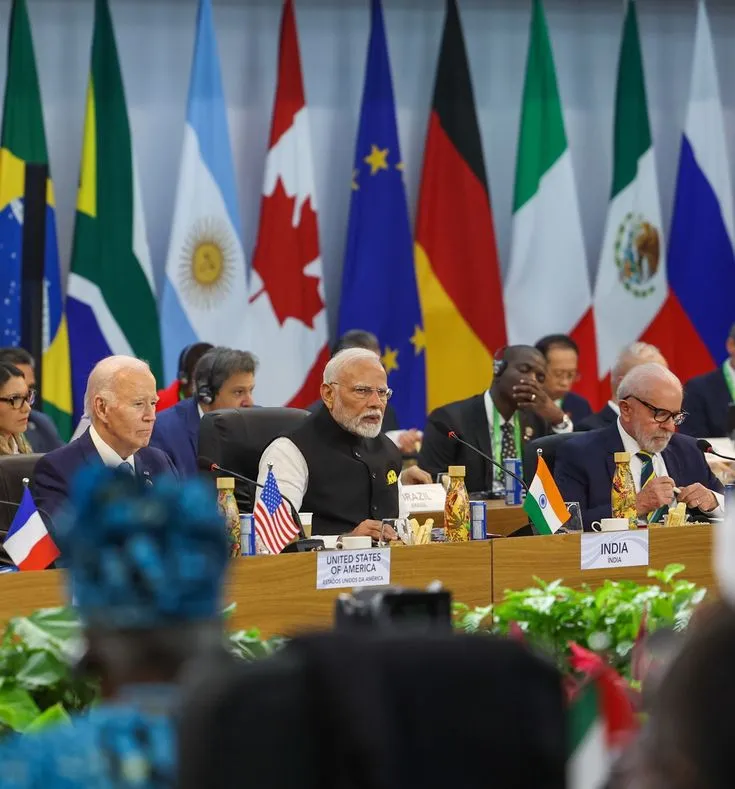
He also reiterated India’s preference for peaceful resolution of conflicts. “There is no solution on the battlefield; all wars and conflicts must be resolved through dialogue and diplomacy,” he said. The emphasis on diplomacy aligns with India’s consistent position that military means alone cannot produce lasting settlements.
Context of the Bishkek Summit
The 26th SCO Summit, hosted by Kyrgyzstan under the chairmanship of President Sadyr Japarov, brought together the organisation’s full membership. The SCO has expanded in recent years and now includes a diverse set of countries spanning Eurasia. For India, the platform offers an opportunity to engage major regional powers on issues of mutual concern while advancing its own priorities on security and connectivity.
Modi’s intervention on terrorism fits within a wider pattern of Indian diplomacy that seeks to keep the issue high on the multilateral agenda. By framing the problem as an ecosystem that includes financing, recruitment, radicalisation and safe havens, he moved the discussion beyond isolated incidents toward the structural conditions that sustain terrorist activity.
Implications for Regional Cooperation
The call for unity carries practical implications. Effective action against terror financing requires information sharing, coordinated financial intelligence and consistent enforcement. Addressing radicalisation demands attention to both online and offline networks. Eliminating safe havens depends on political will and the refusal to distinguish between “good” and “bad” terrorists.
SCO mechanisms already exist for security cooperation. The challenge lies in ensuring that political differences among members do not dilute collective resolve. Modi’s insistence on speaking with one voice is an attempt to set a common standard against which future actions can be measured.
Looking Ahead
The Prime Minister’s remarks at Bishkek reaffirm that security remains central to India’s engagement with the SCO. By placing the dismantling of the terror ecosystem at the forefront, he has sought to focus the organisation’s attention on a threat that affects every member state in different ways. The test will lie in whether the shared language of zero tolerance translates into sustained, coordinated measures on the ground.
In a region where connectivity and economic opportunity are high priorities, the message was clear: durable progress depends first on denying space, resources and legitimacy to those who use violence for political ends. The SCO, Modi argued, must meet that responsibility unitedly and without double standards.
Read more – themenuspark.com , scorematchup.com