Spain High-Speed Train Crash Near Toledo Leaves Multiple Dead
A serious collision involving two high-speed trains in central Spain has left at least 10 people dead, with authorities warning that the death toll is expected to rise. The incident occurred on the morning of October 28, 2026, on the Madrid-Andalusia high-speed line in the province of Toledo, near the towns of Urda, Mora and Orgaz.
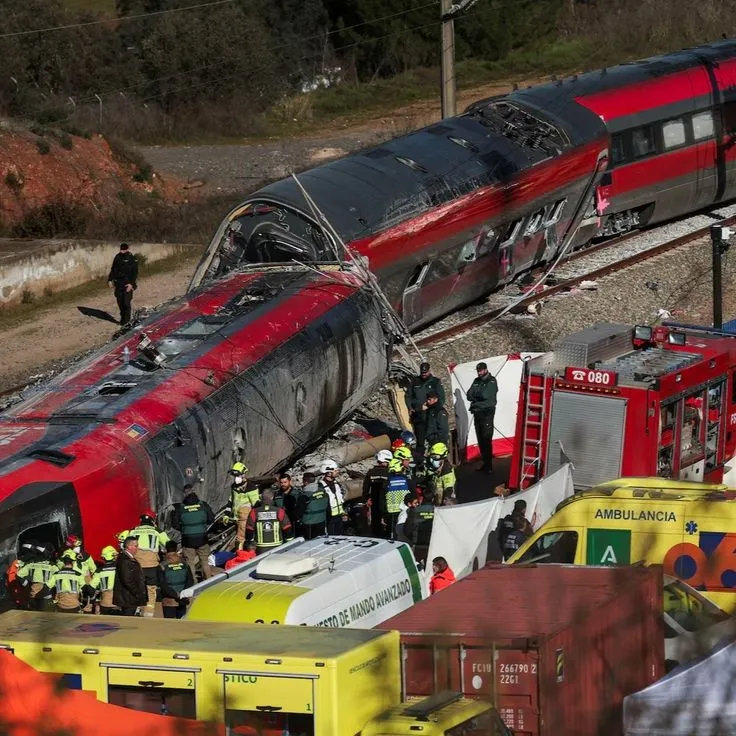
The trains involved were operated by Spain’s state-owned Renfe and the private operator Iryo. Both were travelling from Madrid toward Seville when the Renfe service struck the rear of the Iryo train. The impact caused carriages to derail, with at least two from the Iryo train falling down an embankment.
What Happened on the Madrid-Seville Line
According to statements from regional authorities and the rail infrastructure manager Adif, the collision took place around 9 a.m. local time at kilometre point 118 on the high-speed corridor. Early indications suggest the Iryo train may have been stopped or significantly slowed when it was hit from behind by the Renfe AVE service.
The force of the impact led to derailments and the displacement of carriages down a slope. Emergency services, including fire crews, civil protection units and medical teams, were rapidly deployed to the rural location. Helicopters were also used to support the response.
Esther Padilla, spokesperson for the Castilla-La Mancha regional government, confirmed that at least 10 people had died and stated that the number was likely to increase as rescue and recovery operations continued. She described the situation as serious. Reports from some local sources and media outlets have cited significantly higher casualty figures, though official confirmation has remained cautious while emergency teams work through the wreckage.
Passenger Numbers and Immediate Impact
Authorities reported that approximately 544 people were travelling on the two trains combined. The Renfe service was carrying around 397 passengers, while the Iryo train had about 147 passengers on board, including at least one infant. Many of those involved sustained injuries of varying severity, with emergency services treating and evacuating the wounded.
The mayor of nearby Urda, Manuel Galán, said local facilities, including a sports hall, were being prepared to receive and support injured passengers and those affected by the crash. Rail traffic on the entire Madrid-Andalusia high-speed line was suspended indefinitely while the site was secured and investigations began.
Official Response and Investigation
Spanish Prime Minister Pedro Sánchez expressed shock at the accident and conveyed solidarity with the victims and their families. He indicated that he was in close contact with the transport minister as the emergency response unfolded.
Adif, the state rail infrastructure company, confirmed the suspension of services and provided updates on the location of the incident. Both Renfe and Iryo activated dedicated telephone lines to assist families seeking information about passengers.
Investigators are examining the precise sequence of events. Early information points to a rear-end collision, raising questions about signalling, train control systems, or operational factors that allowed one train to approach another that was stationary or moving slowly on a high-speed line. A full technical inquiry is expected to determine the causes.
Context of Spain’s High-Speed Network
Spain operates one of Europe’s most extensive high-speed rail networks. The Madrid-Andalusia corridor is a major route carrying large volumes of passengers between the capital and southern cities. Accidents on these lines are rare, which makes any serious incident particularly significant.
This collision follows another high-profile accident earlier in 2026 near Adamuz in Córdoba province, which also involved Renfe and Iryo services and resulted in substantial loss of life. The recurrence of serious incidents on the same corridor within a relatively short period has intensified scrutiny of safety systems, operational procedures and infrastructure maintenance on the network.
Rescue Operations and Ongoing Challenges
Rescue teams faced the difficult task of accessing carriages that had left the tracks and come to rest on the embankment. The rural setting added logistical complexity, though the rapid mobilisation of regional and national emergency resources helped coordinate the response.
As recovery work continued, the priority remained locating and assisting all passengers, providing medical care, and supporting families. Hospitals in the region received the injured, while authorities worked to establish a clear and accurate accounting of casualties.
Looking Ahead
The full human cost of the collision will become clearer in the coming hours and days as emergency services complete their work and formal identification processes advance. The technical investigation will focus on understanding how two high-speed trains came into contact on a modern, signalled line and what measures may be required to prevent similar events.
For the families of those killed and injured, the immediate aftermath is one of grief and uncertainty. For Spain’s rail system, the accident represents another serious test of safety protocols on one of its busiest high-speed routes. Authorities have emphasised that all necessary resources are being directed to the response and to determining the causes of the tragedy.
The suspension of services on the Madrid-Andalusia line is expected to cause significant disruption for travellers until the track can be cleared, inspected and certified safe for resumed operations. In the meantime, the focus remains on the victims, the injured, and the thorough examination of what went wrong on the morning of October 28.
Read more – marathibhashaa.com