The Rise of Skin Cycling: A Simple Approach to Modern Skincare
Modern skincare often feels overwhelming. Shelves filled with serums, acids and retinoids encourage the idea that more products applied more frequently will produce better results. In practice, this approach frequently leads to irritation, compromised skin barriers and inconsistent outcomes. Skin cycling offers a structured alternative. Popularised by New York dermatologist Dr Whitney Bowe, the method rotates active ingredients with dedicated recovery periods. The result is a simpler nighttime routine that maximises the benefits of potent ingredients while protecting the skin’s natural barrier.
Understanding the Skin Cycling Method
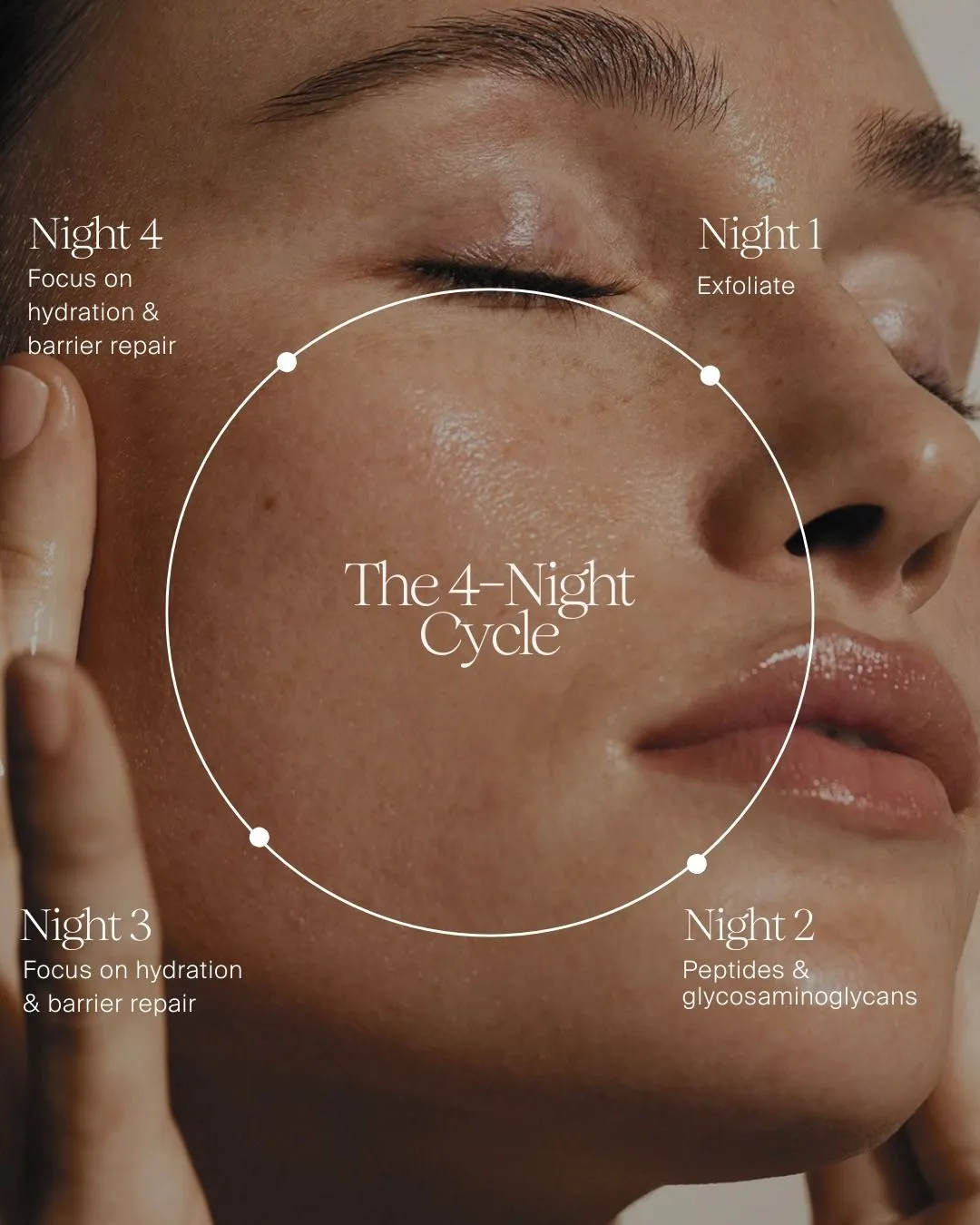
Skin cycling is a rotational nighttime regimen that alternates treatment nights with recovery nights. The classic four-night cycle follows a clear sequence. On the first night, a chemical exfoliant such as an alpha-hydroxy acid or beta-hydroxy acid is applied after cleansing. The second night focuses on a retinoid or retinol. The third and fourth nights are reserved for recovery, using only gentle hydrating and barrier-supporting products. The cycle then repeats.
This structure serves a practical purpose. Exfoliation removes dead surface cells and prepares the skin so that the retinoid applied the following night can work more effectively. The two recovery nights that follow allow the skin barrier to repair itself after exposure to active ingredients. By spacing out the use of acids and retinoids, the routine reduces the cumulative irritation that often occurs when these ingredients are used nightly.
Why the Approach Gained Popularity
The rise of skin cycling coincides with a broader shift toward skin minimalism. Social media had popularised elaborate multi-step routines that layered multiple actives every evening. Many people experienced redness, dryness, peeling or heightened sensitivity as a result. Skin cycling provided a clear, accessible framework that still delivered the benefits of proven ingredients without the constant stress on the barrier.
The method is particularly useful for those new to retinoids or chemical exfoliants. It offers a controlled way to introduce these products while monitoring how the skin responds. Dermatologists note that the approach aligns with established principles of gradual introduction and intermittent use of potentially irritating ingredients. Although the specific four-night sequence has not been tested as a standalone protocol in large clinical trials, its individual components—limited-frequency exfoliation and spaced retinoid application—are supported by long-standing dermatological guidance.
Building the Classic Four-Night Routine
Consistency begins with a gentle cleanser used every night. After cleansing and patting the skin dry, the active step changes according to the cycle.
On exfoliation night, a leave-on chemical exfoliant is applied. Options include glycolic or lactic acid for surface renewal or salicylic acid for those concerned with congestion. The product is followed by a moisturiser. On retinoid night, a pea-sized amount of retinol or prescription retinoid is applied to completely dry skin. Some prefer to buffer the retinoid by applying moisturiser first if sensitivity is a concern. Again, moisturiser follows.
Recovery nights focus exclusively on hydration and barrier support. Ingredients such as ceramides, hyaluronic acid, peptides and niacinamide help replenish moisture and strengthen the skin’s protective function. No acids or retinoids are used. A fragrance-free moisturiser forms the core of these evenings.
Morning routines remain consistent across the cycle. A gentle cleanser, optional hydrating serum, moisturiser and broad-spectrum sunscreen complete the daytime steps. Daily sun protection is essential when using retinoids and acids, as both increase photosensitivity.
Adapting the Cycle for Different Needs
The classic four-night structure serves as a starting point rather than a rigid prescription. Those with sensitive skin may extend recovery nights or begin with lower-strength actives. Individuals with oilier or more resilient skin sometimes introduce an additional active night once tolerance is established. Seasonal changes, hormonal fluctuations and lifestyle factors can also influence how frequently actives are used.
Newer interpretations of the method emphasise personalisation. The core principle remains the same: active ingredients are rotated with intentional recovery periods rather than applied every night. Hydration and barrier support stay central throughout. Listening to the skin and adjusting frequency based on visible response produces better long-term results than strict adherence to a fixed schedule.
Practical Benefits and Considerations
When followed thoughtfully, skin cycling can improve texture, support clearer-looking pores and address early signs of ageing while minimising common side effects of actives. Spacing out exfoliation and retinoid use helps maintain barrier integrity, which in turn supports more consistent progress. The routine also simplifies decision-making. Instead of deciding which serum to layer each evening, users follow a predictable rotation.
Certain precautions apply. Those with very reactive skin, active eczema or other barrier-compromising conditions should consult a dermatologist before introducing acids or retinoids. Pregnancy and breastfeeding require specific guidance regarding retinoid use. Starting slowly remains important even within a cycling framework. Begin with gentle formulations and increase strength only after the skin demonstrates clear tolerance.
Product selection matters less than consistency and recovery. A modest set of well-chosen items—a gentle cleanser, one chemical exfoliant, one retinoid and a supportive moisturiser—covers the essentials. Adding unnecessary steps on recovery nights undermines the purpose of the cycle.
A Sustainable Approach to Active Skincare
Skin cycling reflects a maturing understanding of how skin responds to treatment. Rather than pursuing constant stimulation, the method recognises that repair is an essential part of progress. By giving the barrier regular opportunities to recover, users can continue benefiting from effective ingredients over the long term.
The approach suits a wide range of skin types and experience levels. Beginners gain a structured introduction to actives. Experienced users find a way to maintain results without the irritation that sometimes accompanies intensive routines. In both cases, the emphasis remains on balance, observation and gradual improvement.
As skincare continues to move away from excess and toward intentional use of proven ingredients, skin cycling offers a practical framework. It replaces guesswork with a clear sequence, reduces the risk of overuse, and supports the skin’s natural ability to renew itself. For many, this simple rotation has become a reliable foundation for healthier, more resilient skin over time.
Read more – Aeshikshakosh.com