Punjab Protests Ahead of Polls, SC on Police CCTVs, Sheikh Hasina’s Media Return
Three distinct developments across the region have drawn significant attention in recent days. In Punjab, a wave of protests and strikes is testing the state government as Assembly elections approach. In New Delhi, the Supreme Court continues to monitor progress on a long-standing directive for CCTV coverage in police stations. Meanwhile, former Bangladesh Prime Minister Sheikh Hasina made her first public media appearance in nearly two years, speaking virtually from India and signalling her intent to return home.
Growing Unrest in Punjab Ahead of Assembly Elections
Punjab is witnessing multiple layers of agitation as the state heads toward the 2027 Assembly elections. The Aam Aadmi Party government, which came to power in 2022 with strong support from various sections of society, now faces sustained pressure from government employees, contractual workers, job aspirants and farmer groups.
Sanitation workers, ministerial staff in deputy commissioner offices and contractual employees at Aam Aadmi Clinics have staged strikes that have disrupted public services. MGNREGA workers have remained on strike for more than a month seeking regular pay scales and clearance of pending dues. Outsourced staff at Sewa Kendras have protested for better wages, while power department apprentices and linemen have demanded regular appointments after completing their training. Employee unions have also raised demands for restoration of the old pension scheme, revisions to pay structures and shorter probation periods. Large-scale demonstrations have been planned in Chandigarh and other locations.
Farmer organisations have organised statewide actions over fertiliser shortages, rising fuel prices and concerns related to land acquisition. Opposition parties and student groups have separately staged protests focusing on issues such as examination irregularities and unpaid allowances. In some instances, police have used water cannons to manage crowds near the Assembly complex.
The state government has deputed ministers to hold talks with various unions in an effort to resolve the disputes. Officials acknowledge that prolonged disruptions could affect service delivery and public sentiment. For a government that rose to power on promises of improved governance and employment opportunities, the current wave of restiveness presents both administrative and political challenges in the months leading up to the polls.
Supreme Court Reviews CCTV Implementation in Police Stations
Parallel to these state-level developments, the Supreme Court has been closely examining the nationwide installation of CCTV cameras in police stations. The directive originated from a 2021 judgment that required cameras at critical points including entry and exit gates, lock-ups, corridors, reception areas and rooms of senior officers. The aim was to enhance transparency, deter custodial excesses and create an objective record of activities inside police facilities.
The court initiated suo motu proceedings after reports highlighted non-functional cameras in certain locations. Over successive hearings, it has sought compliance reports from the Centre, states and Union Territories. Recent updates indicate that substantial progress has been made in many parts of the country. Several states and Union Territories, including Punjab, have reported full installation of cameras along with centralised monitoring systems.
On the funding front, the Centre informed the court that a proposal for an umbrella police modernisation scheme has been forwarded to the Finance Ministry for in-principle approval. The existing assistance scheme that supports CCTV infrastructure has been extended until March 2027. The court has noted the positive momentum while continuing to flag the need for sustained funding and proper maintenance of the equipment already installed. Further details of the modernisation proposal are expected to be placed on record, with the matter listed for continued monitoring.
The ongoing judicial oversight underscores the importance of functional surveillance systems as a tool for accountability within the criminal justice process. While installation numbers have improved, the emphasis has shifted toward ensuring that the cameras remain operational and that the data they generate can be effectively used when required.
Sheikh Hasina’s First Media Appearance in Nearly Two Years
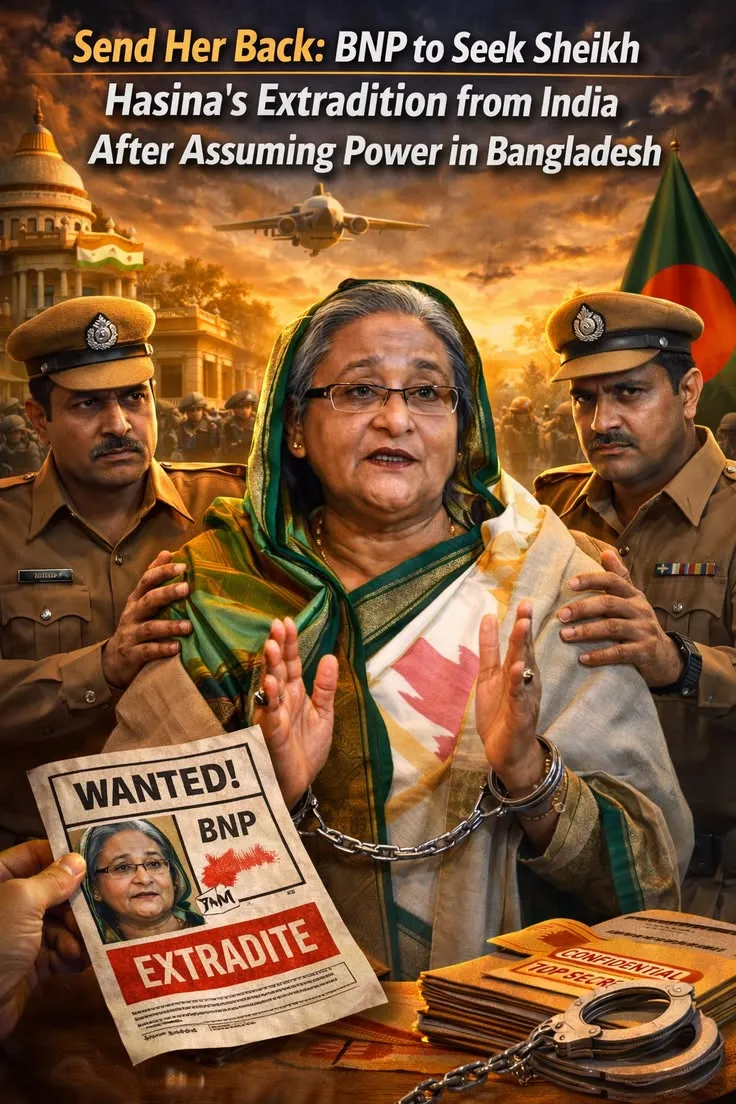
In a separate development with regional implications, former Bangladesh Prime Minister Sheikh Hasina addressed the media for the first time since leaving the country in August 2024. The virtual interaction, organised by a private media body in New Delhi, coincided with the second anniversary of the student-led uprising that led to her departure after 15 years in power.
Speaking from India, Hasina stated her determination to return to Bangladesh by December. She described the current situation in her country as one that did not reflect the vision for which sacrifices had been made and called for the lifting of the ban on her Awami League party along with the release of political prisoners. She acknowledged the risks involved, including possible imprisonment or a death sentence handed down in absentia by a tribunal, yet reiterated her resolve to return and work toward restoring what she described as the right path for the nation.
The Bangladesh government expressed strong objection to the event being held from Indian soil. India clarified that the press interaction was organised by a private entity and that the government had no involvement. The appearance marks a notable moment in Hasina’s period of exile and is likely to influence political discussions both within Bangladesh and in bilateral relations with India.
Interconnected Themes of Accountability and Political Transition
Although these three developments unfold in different spheres, they share underlying themes of accountability, public pressure and institutional response. In Punjab, citizen and employee groups are using protests to hold the government to its earlier commitments on jobs, wages and service delivery as elections draw closer. The Supreme Court’s persistent monitoring of CCTV coverage reflects a judicial insistence on transparency within law-enforcement institutions. Sheikh Hasina’s re-emergence on the public stage, meanwhile, highlights the unfinished nature of political transitions and the enduring influence of leaders even in exile.
Each of these situations continues to evolve. The Punjab government faces the practical task of addressing multiple simultaneous demands without allowing public services to deteriorate further. The Centre and states must translate the Supreme Court’s directions into durable systems of surveillance and oversight. In the Bangladesh context, Hasina’s stated timeline for return introduces a new variable into an already complex political landscape.
Taken together, the events illustrate how questions of governance, rights and political legitimacy remain active across the region. They also demonstrate the role of courts, civil society and public communication in shaping the direction of these processes.
Read more – situsmerahtoto.info