Summer AC Safety and Savings: Smart Ways to Prevent Blasts and Cut Power Costs
Why AC Safety Matters More During Summer
Air conditioners work harder when outdoor temperatures remain high for long hours, and that extra workload can expose neglected equipment to electrical and mechanical problems. Many people focus only on cooling performance during summer, while basic safety checks often get ignored until something goes wrong.
A properly maintained AC can cool a room efficiently without putting unnecessary pressure on its electrical components. However, damaged wiring, overloaded circuits, poor maintenance, refrigerant problems, and blocked airflow can create serious risks. Regular inspection becomes especially important when an air conditioner runs almost continuously throughout the day.
Electricity consumption also rises quickly when the AC temperature is kept unnecessarily low. Small changes in temperature settings, maintenance habits, and room management can make a noticeable difference to monthly electricity bills.
Keep Your AC Wiring Properly Checked
Electrical wiring deserves serious attention because damaged wires can become dangerous when an AC operates for several hours continuously. Loose connections, burnt terminals, exposed wires, or improperly installed electrical components should never be ignored.
If you notice burning smells, unusual buzzing sounds, sparks, repeated circuit trips, or visible wire damage, switch off the AC and arrange an inspection by a qualified electrician. Continuing to operate the appliance despite these warning signs can increase the possibility of electrical damage.
The air conditioner should also have suitable electrical protection according to the manufacturer’s requirements. Avoid using cheap extension boards or overloaded sockets for high-power appliances because they may not handle the required electrical load safely.
Clean Filters Before Cooling Gets Heavy
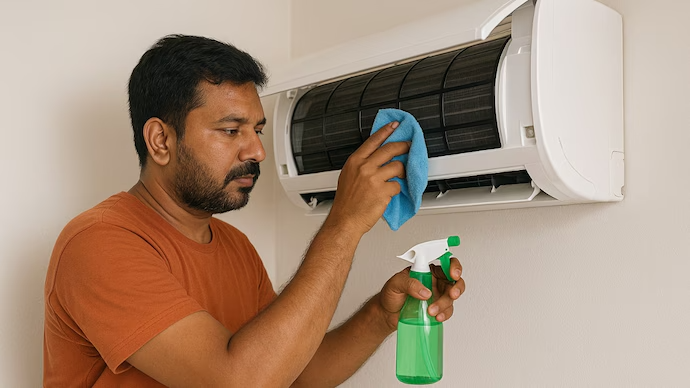
Dirty filters are one of the simplest reasons an AC starts consuming more electricity than expected. When dust blocks the filter, the indoor unit struggles to circulate air properly, and the compressor may need to operate for longer periods.
Cleaning the filters regularly helps maintain airflow and keeps the cooling system working more efficiently. Homes with pets, construction dust, open windows, or heavy indoor dust may require more frequent cleaning than relatively clean environments.
Do not wait until the AC stops cooling properly before checking the filters. A quick inspection every couple of weeks during heavy summer usage can help identify accumulated dust before it becomes a bigger problem.
Never Ignore Strange AC Noises
An AC making unusual sounds should not automatically be treated as normal operating noise. Clicking, buzzing, grinding, rattling, or repeated electrical sounds can sometimes indicate a component problem that needs professional attention.
Some problems may involve the fan motor, electrical connections, compressor, or other internal parts. Continuing to run the appliance for many hours while unusual sounds are present can potentially make a small fault more expensive.
If the sound suddenly appears after months of normal operation, take it seriously. Turning off the appliance and getting a qualified technician to inspect it is generally safer than repeatedly restarting the unit and hoping the noise disappears.
Set Temperature Without Overcooling
Keeping an AC at an extremely low temperature does not necessarily cool a room faster in the way many people expect. Instead, the system may continue working for longer periods while consuming more electricity.
A moderate cooling setting can provide comfortable indoor conditions while avoiding unnecessary energy consumption. Many households can also reduce usage by adjusting the temperature slightly upward when nobody requires intense cooling.
Using a fan alongside the AC can sometimes improve perceived comfort because moving air helps people feel cooler. This approach may allow the AC temperature to remain somewhat higher without making the room feel uncomfortable.
Give Your Compressor Enough Breathing Space
The outdoor AC unit needs adequate airflow because it releases heat from inside the building. If furniture, boxes, plants, plastic sheets, or other objects block the outdoor unit, heat dissipation can become less effective.
Poor airflow around the outdoor unit can make the cooling system work harder and may increase electricity consumption over time. It can also place additional stress on important components when temperatures outside are already extremely high.
Keep the surrounding area reasonably clear and avoid covering the outdoor unit with materials that restrict ventilation. If the unit becomes heavily dusty or dirty, professional cleaning can help restore proper airflow.
Check Your AC Before Peak Summer
Waiting for the hottest week of summer to discover an AC problem can be frustrating and expensive. A preventive service before heavy usage begins can identify issues involving filters, coils, electrical connections, drainage, airflow, and other components.
Professional servicing is particularly useful when an AC has not been maintained for a long period. Technicians can inspect areas that homeowners generally cannot safely access themselves.
Regular maintenance does not guarantee that every failure will be prevented, but it can reduce the chances of avoidable problems developing during periods when the appliance is under heavy demand.
Use Timers Instead Of All-Night Cooling
Running an AC throughout the entire night can increase electricity consumption, especially when the room becomes comfortable after the first few hours. A timer or sleep mode can reduce unnecessary operation while still maintaining reasonable comfort.
Many modern AC systems provide sleep settings that gradually adjust operation according to programmed conditions. These functions can be useful for people who tend to fall asleep with the AC running and forget to switch it off.
You can also combine timer settings with a ceiling fan where practical. The objective is not to stop using the AC completely, but to avoid operating it longer than necessary.
Close Doors And Windows Properly
An AC cannot efficiently cool a room when conditioned air continuously escapes through open doors or poorly sealed windows. Hot outside air enters the room, forcing the cooling system to work harder.
Keep doors and windows closed while the AC is operating. Curtains or blinds can also help reduce direct sunlight entering the room, particularly during the hottest afternoon hours.
Simple room-management habits often cost nothing but can improve cooling efficiency. Reducing heat entering the room means the AC does not have to fight against as much external heat throughout the day.
Watch For Water Leakage
Water dripping from an indoor AC unit should not simply be ignored because drainage problems can become worse over time. A blocked drain pipe, dirty coil, installation issue, or another fault may sometimes cause unexpected leakage.
Water near electrical equipment creates an additional safety concern, particularly when leakage reaches wiring or other electrical components. If unusual water leakage appears, switch off the system when appropriate and arrange professional inspection.
Regular maintenance can help identify drainage problems before they cause damage to walls, furniture, electrical areas, or the AC itself.
Avoid Cheap Electrical Work
Trying to save money through unqualified electrical repairs can create much bigger problems later. Air conditioners are high-power appliances, so installation and electrical servicing should be handled by properly qualified professionals.
Avoid makeshift wiring, loose connections, unsuitable plugs, overloaded sockets, and improvised repairs. These shortcuts can increase electrical risks and may also affect appliance performance.
The safest approach is simple, use components that meet the manufacturer’s requirements and have electrical work performed by someone properly qualified for the job.
Small Habits Can Lower Bills
Reducing an AC electricity bill does not always require expensive upgrades or complicated technology. Cleaning filters, using timers, keeping rooms shaded, maintaining proper airflow, and choosing sensible temperature settings can collectively reduce unnecessary consumption.
You can also identify which rooms actually need cooling instead of running multiple AC units throughout the home. When possible, concentrate cooling where people are present rather than conditioning empty spaces.
Tracking your monthly electricity usage can also reveal whether consumption changes after certain habits are introduced. This makes it easier to understand what is actually helping rather than relying on assumptions.
Conclusion: Safer Cooling Can Also Cost Less
Using an air conditioner safely during extreme summer conditions requires more than simply switching it on and setting a temperature. Proper wiring, regular servicing, clean filters, clear outdoor airflow, and quick attention to unusual sounds or leaks can reduce avoidable safety risks. At the same time, moderate temperature settings, timers, closed windows, shaded rooms, and sensible daily usage can help control electricity consumption. There is no single trick that will eliminate a high AC bill, but several small habits can make a meaningful difference when followed consistently. Review your AC setup before heavy summer usage and arrange professional maintenance whenever a safety concern appears.