What Is Chappan Bhog and Why 56 Dishes Are Offered to Lord Krishna on Janmashtami
Janmashtami, the celebration of Lord Krishna’s birth, is marked by devotion, music, fasting, and joyful rituals across homes and temples. Among the most cherished traditions is the offering of Chappan Bhog, a grand presentation of 56 distinct food items prepared with care and offered to the deity. The practice goes far beyond a simple feast. It carries deep mythological roots, cultural meaning, and an expression of gratitude that has been passed down for generations.
Understanding Chappan Bhog
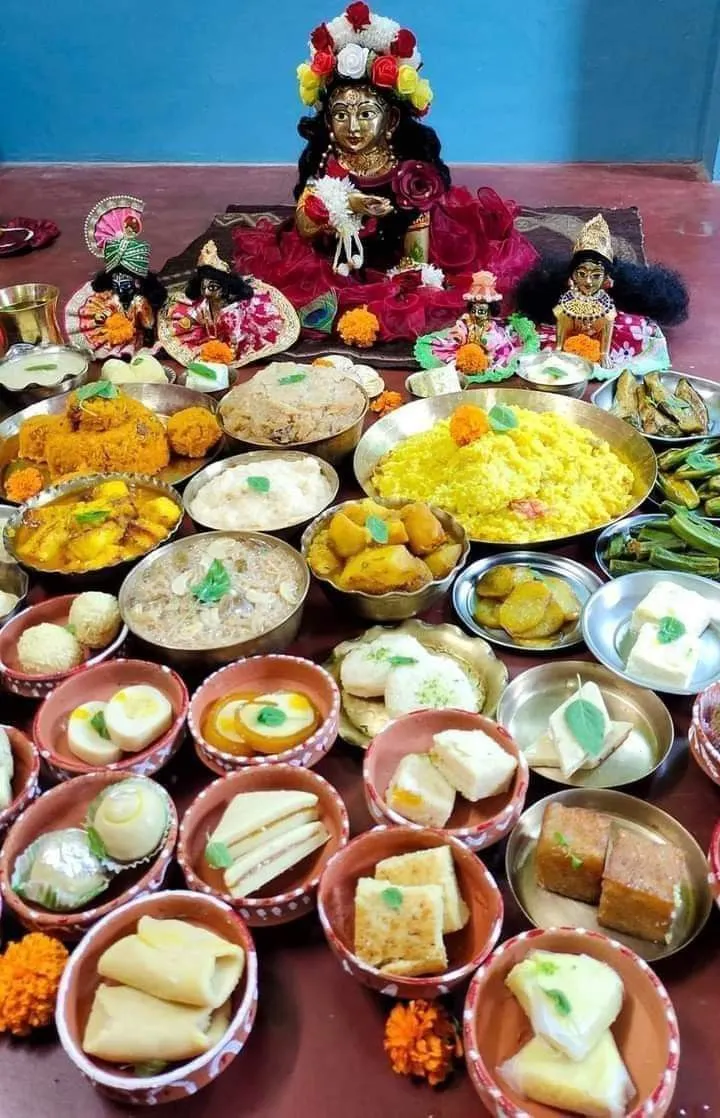
Chappan Bhog combines two Hindi words: “chappan,” meaning fifty-six, and “bhog,” meaning food offering or sacred meal. It refers to a carefully arranged assortment of 56 sattvic dishes presented to Lord Krishna. These foods are prepared without onion and garlic, following the principles of purity associated with temple and festival offerings. The spread typically balances different tastes—sweet, sour, salty, spicy, bitter, and sometimes umami—creating a complete and harmonious meal.
The offerings generally include a variety of sweets, savoury snacks, fruits, dairy products, and other foods traditionally believed to be dear to Lord Krishna. Common items feature milk-based preparations such as makhan-mishri (butter with rock sugar), kheer, rasgulla, rabdi, and malpua. Sweets often include laddoos, peda, jalebi, ghevar, mohanbhog, and moong dal halwa. Savoury elements may consist of puri, kachori, mathri, pakoras, khichdi, various vegetable dishes, kadhi, and papad. Fruits, nuts, dry fruits, curd, buttermilk, and simple rice preparations also form part of the platter. While the exact list can vary by region and family tradition, the total number of items remains fifty-six.
The Mythological Story Behind the Tradition
The origin of Chappan Bhog is closely tied to a well-known episode from Krishna’s childhood in the Braj region. According to the legend, the people of Vrindavan and surrounding villages used to offer elaborate worship and food to Indra, the deity associated with rain, in the hope of securing good monsoons and harvests. Young Krishna questioned this practice. He suggested that the villagers instead honour Govardhan Hill, which provided them with grass for cattle, water, and other natural resources essential for their livelihood.
When the people followed Krishna’s advice and stopped the traditional offerings to Indra, the rain god became angry. He unleashed continuous torrential rains and storms that threatened to flood the entire area. To protect the villagers, their cattle, and their homes, Krishna lifted the massive Govardhan Hill on his little finger and held it aloft like an umbrella. For seven full days and nights, he remained in that position, sheltering everyone beneath the hill.
During those seven days, Krishna neither ate nor drank. It is said that Mother Yashoda normally fed him eight times a day. After the rains finally stopped and Indra recognised his error, the grateful people of Braj realised that Krishna had gone without food for an entire week. To make up for the missed meals and to express their profound thanks, they prepared fifty-six different dishes—eight meals multiplied by seven days—and offered them to him. This act of love and gratitude became the foundation of the Chappan Bhog tradition.
Why the Offering Continues on Janmashtami
Although the original event is linked to the protection of Braj under Govardhan Hill and is also remembered during Govardhan Puja, the practice of presenting Chappan Bhog has become an integral part of Janmashtami celebrations. Devotees see it as a way to honour Krishna’s compassion, strength, and care for his people. Offering the fifty-six items is regarded as an expression of complete devotion and a symbolic repayment of the meals he forwent while safeguarding the community.
The ritual also reflects the belief that Krishna takes special delight in food prepared with pure intention and affection. By creating an abundant and varied spread, devotees aim to please him and seek his blessings for prosperity, protection, and spiritual fulfilment. In many temples and homes, the prepared bhog is later distributed as prasad, allowing the community to share in the sanctified food.
The Significance of Sattvic and Varied Foods
The emphasis on sattvic ingredients underscores the purity of the offering. Dairy products hold special importance because of Krishna’s well-known childhood fondness for butter, milk, and curd. Sweets represent joy and celebration, while savoury and grain-based dishes ensure the meal is complete and sustaining. Fruits and nuts add freshness and nutritional balance. Together, the fifty-six items create a sense of abundance that mirrors the overflowing love devotees feel toward the deity.
Regional variations enrich the tradition further. In some places the focus may lean more heavily toward milk sweets and local specialities, while elsewhere a wider range of vegetables, fried snacks, and rice preparations appears. What remains constant is the number fifty-six and the underlying spirit of gratitude.
A Living Tradition of Devotion
Chappan Bhog is more than a historical re-enactment. It is a living practice that connects modern devotees with an ancient story of protection and reciprocity. Preparing the extensive array of dishes requires time, effort, and collective participation, especially in temples where large quantities are made. Families often involve children in simpler tasks, passing down both recipes and the meaning behind the ritual.
On Janmashtami, after the midnight celebrations marking Krishna’s birth, or during the day’s special worship, the Chappan Bhog is formally offered with prayers and bhajans. The sight of the colourful, fragrant spread arranged before the deity becomes a focal point of the festivities, reminding everyone of the intimate relationship between the divine and the devotee.
Through this tradition, the story of Krishna lifting Govardhan Hill continues to inspire. The fifty-six offerings stand as a tangible expression of thankfulness for protection, a celebration of his playful yet powerful nature, and an invitation for blessings in return. Whether prepared on a grand scale in a temple or more modestly at home, Chappan Bhog remains one of the most meaningful and delicious ways devotees honour Lord Krishna on his birthday.
Read more – wisdomsuvichar.com