Automotive Maintenance Tips to Improve Vehicle Performance and Extend Its Lifespan
Regular automotive maintenance remains one of the most effective ways to keep a vehicle performing reliably while significantly extending its useful life. Consistent attention to basic systems prevents minor issues from escalating into expensive failures, improves fuel efficiency, maintains safety, and helps preserve resale value. The practices outlined below draw from established guidelines that apply across most modern passenger vehicles. Always consult the specific owner’s manual for exact intervals and specifications tailored to the make, model, and engine.
Follow the Manufacturer’s Maintenance Schedule
The owner’s manual provides the most accurate roadmap for service intervals. Manufacturers design these schedules based on extensive testing of how components wear under real-world conditions. Adhering to recommended timelines for oil changes, fluid replacements, filter services, and inspections addresses wear before it compounds. Skipping scheduled services often leads to cascading problems that cost far more than the original maintenance would have.
Modern vehicles frequently feature oil-life monitoring systems that adjust intervals based on driving conditions. Still, the manual remains the authoritative source. Recording every service creates a clear history that supports both reliability and future value.
Prioritize Engine Oil and Filter Changes
Engine oil lubricates moving parts, reduces friction, carries away heat, and traps contaminants. Over time oil breaks down and becomes contaminated, increasing wear. Changing the oil and filter at the intervals specified in the owner’s manual—commonly every 5,000 to 10,000 miles depending on oil type and driving conditions—stands as one of the single most important actions for long-term engine health.
Using the correct viscosity and specification recommended by the manufacturer ensures proper protection across temperature ranges. Synthetic oils often allow longer intervals while leaving fewer deposits. Checking the oil level monthly and before long trips provides an early warning of leaks or consumption issues.
Maintain All Critical Fluids
Fluids serve as the lifeblood of multiple systems. Engine coolant regulates temperature and contains corrosion inhibitors that degrade over time. Brake fluid absorbs moisture and loses effectiveness. Transmission fluid protects gears and clutches. Power steering fluid (where applicable) and windshield washer fluid also require attention.
Check levels regularly while the engine is cool. Top off as needed with the exact fluid type specified for the vehicle. Coolant and brake fluid typically require periodic flushes rather than simple top-offs, because their protective properties diminish. Transmission fluid service intervals vary widely; following the manufacturer’s guidance prevents premature wear in this expensive component.
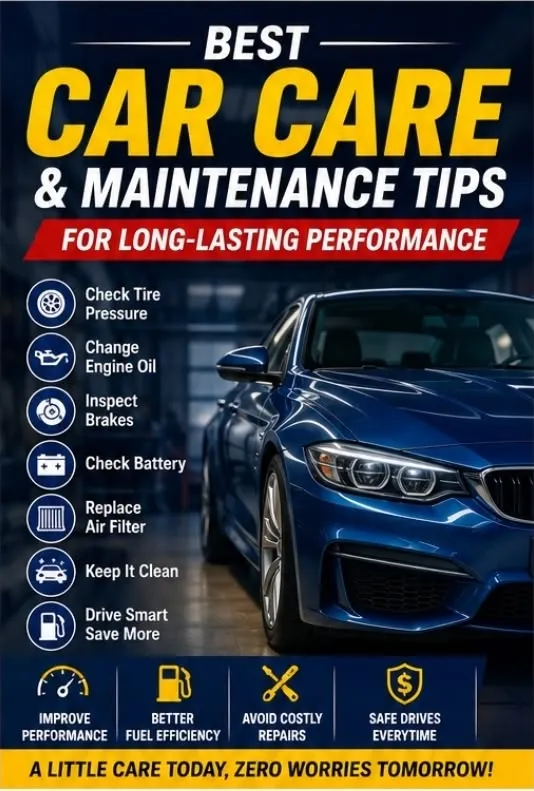
Care for Tires, Alignment, and Suspension
Tires influence safety, handling, fuel economy, and overall vehicle stress. Check tire pressure at least monthly and before extended trips, adjusting to the pressures listed on the driver’s door placard rather than the sidewall maximum. Underinflated tires generate excess heat and wear faster; overinflated tires reduce traction and ride quality.
Rotate tires every 5,000 to 8,000 miles, or as recommended, to promote even wear. Inspect tread depth regularly—when tread reaches approximately 2/32 of an inch, replacement becomes necessary for safe wet-weather performance. Uneven wear patterns often signal alignment or suspension issues that should be corrected promptly. Proper alignment also reduces strain on steering and suspension components.
Keep Filters Clean
A clogged engine air filter restricts airflow, forcing the engine to work harder and reducing efficiency and power. Replace it according to the manual, often every 12,000 to 30,000 miles or when visibly dirty. The cabin air filter protects the HVAC system and interior air quality; service it on a similar schedule, especially in dusty or high-pollen environments.
Fuel filters, where serviceable, also deserve attention to maintain consistent fuel delivery.
Monitor the Battery and Electrical System
Most conventional batteries last three to five years. Extreme temperatures accelerate aging. Inspect terminals periodically for corrosion and clean them as needed to ensure solid connections. Test battery health before winter or long journeys, and replace a weak battery proactively rather than waiting for failure.
Secure connections and clean terminals support reliable starting and protect the charging system.
Inspect Brakes, Belts, and Hoses
Have the brake system—including pads, rotors, and fluid—inspected regularly, often at every oil change or annually. Replace pads before they reach metal-to-metal contact to avoid damaging rotors and compromising stopping performance. Brake fluid typically requires replacement around 30,000-mile intervals or every two to three years.
Serpentine belts and radiator hoses should be examined for cracks, fraying, glazing, or soft spots. Replace them before failure to prevent roadside breakdowns or overheating.
Practice Smooth Driving Habits
Driving style directly affects component longevity. Aggressive acceleration, hard braking, and high-speed cornering increase heat and mechanical stress on the engine, transmission, brakes, and suspension. Smooth inputs reduce wear and often improve fuel economy. Allow the engine to warm gradually rather than demanding high power immediately after a cold start. Occasional longer drives at highway speeds help evaporate moisture that can accumulate during short trips.
Address Warning Lights and Unusual Symptoms Promptly
Dashboard warning lights, new noises, vibrations, or changes in handling rarely resolve themselves. Investigating these signals early frequently prevents more extensive damage. A multi-point inspection during routine service can catch developing issues with belts, hoses, suspension, or exhaust components.
Additional Protective Measures
Keep the undercarriage clean in regions that use road salt to limit corrosion. Maintain exterior paint and apply wax periodically to protect against environmental damage. Lubricate door hinges, locks, and other moving points to prevent premature wear. Replace windshield wipers when streaking begins, typically every six to twelve months.
Taken together, these practices form a coherent system of care. Regular oil changes, fluid management, tire maintenance, filter service, and attentive driving habits work synergistically to reduce friction, control temperatures, maintain efficiency, and delay major repairs. Vehicles that receive consistent, schedule-based attention commonly reach higher mileages with fewer interruptions and lower overall ownership costs. The investment of time and modest expense in routine maintenance delivers measurable returns in reliability, performance, and longevity.
Read more – Suvicharsathi.com