How Balance Exercises Improve Stability and Fitness
Balance is an essential part of physical fitness that affects everyday movements, athletic performance, and overall body control. How balance exercises improve stability is closely connected with the way muscles, joints, and the nervous system work together to maintain proper posture and movement. Whether a person is an athlete, a fitness beginner, or someone looking to improve daily mobility, balance training can provide important physical benefits.
Many people focus mainly on strength training or cardio workouts while overlooking balance exercises. However, good balance supports safer movement, improves coordination, reduces the risk of falls, and helps the body perform activities more efficiently. Adding balance exercises to a regular fitness routine creates a stronger foundation for long-term health and physical performance.
Understanding Balance and Its Importance in Fitness
Balance is the ability of the body to maintain control and stability while standing still or moving. It depends on the coordination between muscles, joints, the inner ear, vision, and the nervous system.
The body constantly adjusts itself to maintain stability during activities such as walking, running, lifting objects, climbing stairs, or playing sports. Good balance allows these movements to happen smoothly and efficiently.
Balance is not only important for athletes. It plays a major role in daily activities and helps people maintain independence as they age. Improving balance allows individuals to move with greater confidence and control.
How Balance Exercises Improve Stability
Balance exercises improve stability by training the body to maintain control during different movements and positions. These exercises challenge the muscles responsible for posture and coordination, helping them become stronger and more responsive.
When people regularly practice balance movements, their muscles learn to react faster to changes in body position. This improves the ability to recover from sudden movements, uneven surfaces, or unexpected shifts in weight.
Improved stability also supports better posture. Strong balance control helps maintain proper alignment of the spine, hips, knees, and ankles, reducing unnecessary stress on the body.
Strengthening Core Muscles Through Balance Training
The core muscles play an important role in maintaining balance and stability. These muscles include the abdomen, lower back, hips, and pelvis, which work together to support the body during movement.
Many balance exercises naturally activate the core because the body must maintain control while performing different positions. A stronger core improves posture, supports movement efficiency, and helps protect the body during physical activities.
A stable core also improves performance in activities such as running, swimming, weight training, and sports that require quick changes in direction.
Improving Coordination and Body Awareness
Balance exercises improve coordination by teaching the brain and body to work together more effectively. This connection between the nervous system and muscles is known as body awareness.
Better body awareness helps people understand their movement patterns and control their positions more accurately. This is especially useful in sports, exercise routines, and daily activities that require precise movements.
For beginners, balance training can improve confidence by making movements feel more controlled and comfortable.
Reducing the Risk of Injuries
One of the major benefits of balance exercises is injury prevention. Poor balance can increase the chances of slips, falls, and incorrect movement patterns that may lead to injuries.
Balance training strengthens supporting muscles around important joints such as the ankles, knees, and hips. Stronger supporting muscles provide better protection during physical activities.
Athletes often include balance exercises in their training programs because improved stability helps prevent sports-related injuries and supports better movement techniques.
Supporting Better Athletic Performance
Balance is an important skill in almost every sport. Athletes need stability and body control to perform movements effectively, whether they are jumping, running, changing direction, or maintaining position.
Balance exercises improve agility, reaction ability, and movement efficiency. Sports such as football, basketball, tennis, martial arts, and gymnastics require strong balance skills for better performance.
Even activities that appear strength-focused benefit from balance because stable body positioning allows athletes to generate power more effectively.
Improving Posture and Daily Movement
Modern lifestyles often involve long periods of sitting, which can negatively affect posture and muscle balance. Weak supporting muscles may lead to poor body alignment and discomfort.
Balance exercises encourage proper posture by strengthening muscles that support the spine and improving awareness of body position.
Better posture makes everyday activities easier, including walking, standing for long periods, carrying objects, and performing household tasks. Improved stability allows people to move more naturally and comfortably.
Balance Exercises for Different Fitness Levels
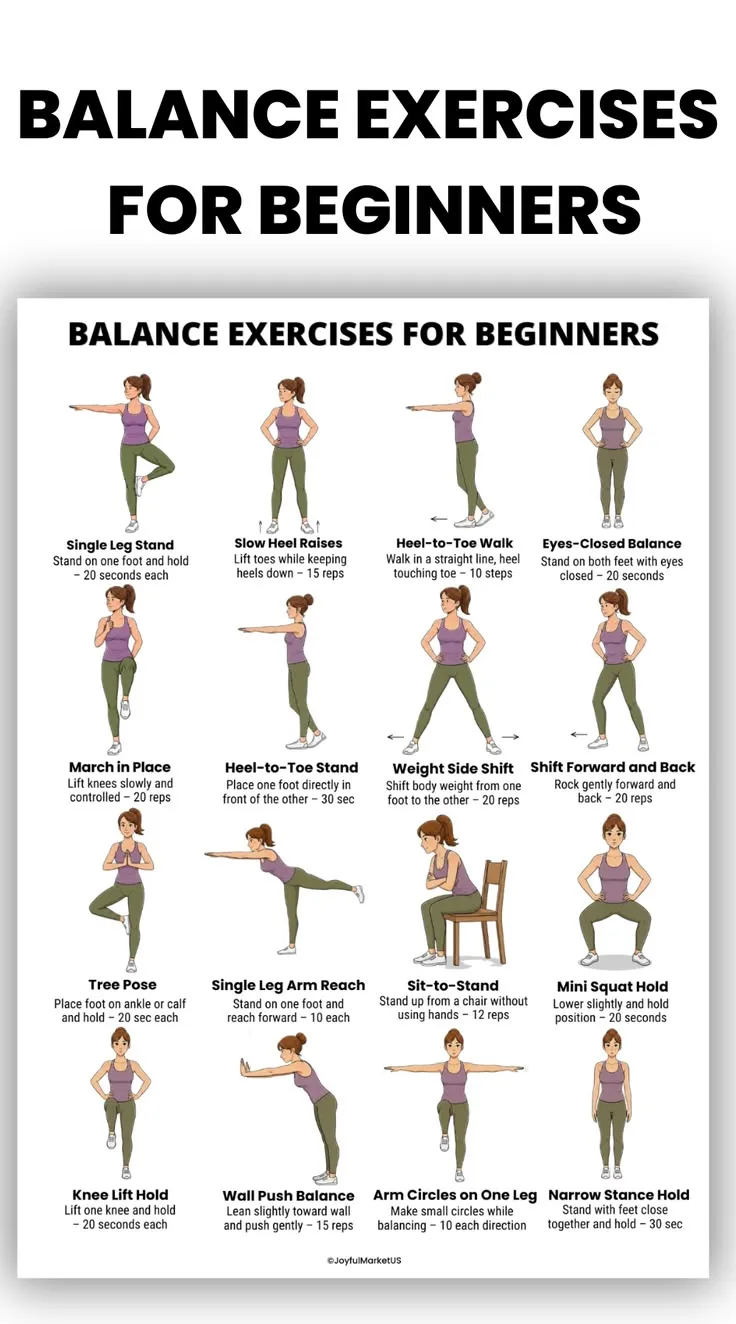
Balance training can be adapted for beginners, intermediate fitness enthusiasts, and advanced athletes. Beginners can start with simple exercises that improve basic stability and gradually increase difficulty.
Simple movements such as standing on one leg, controlled walking exercises, and stability-focused movements can help beginners develop balance skills.
More advanced individuals can include challenging exercises involving movement, unstable surfaces, or combined strength and balance activities. The key is to progress gradually and maintain proper technique.
Combining Balance Training With Other Fitness Activities
Balance exercises work best when combined with other forms of physical activity. A complete fitness routine should include strength training, cardiovascular exercise, flexibility work, and balance training.
Strength exercises build muscle power, cardio improves endurance, flexibility supports movement range, and balance training improves control and stability.
Together, these components create a well-rounded approach to physical fitness and support overall body performance.
Tips for Practicing Balance Exercises Safely
Safety is important when starting balance training. Beginners should perform exercises in a safe environment and focus on controlled movements rather than speed.
Maintaining proper posture and breathing technique helps improve effectiveness. It is also important to avoid pushing beyond personal limits, especially when learning new movements.
Consistency is more valuable than intensity. Regular practice helps the body gradually adapt and improve balance skills over time.
The Role of Balance Exercises in Long-Term Health
Balance training provides benefits throughout different stages of life. For younger individuals, it supports athletic development and physical confidence. For older adults, it helps maintain mobility, independence, and safer movement.
As people age, maintaining balance becomes increasingly important because natural changes in muscle strength and coordination can affect stability.
Including balance exercises in a regular fitness routine supports healthier movement patterns and contributes to better quality of life.
Conclusion
Understanding how balance exercises improve stability highlights their importance in building a strong and healthy body. Balance training strengthens core muscles, improves coordination, supports posture, reduces injury risks, and enhances overall physical performance.
Balance exercises are valuable for everyone, regardless of age or fitness level. They provide a foundation for better movement and help the body perform daily activities with greater confidence and control.
By including balance exercises alongside strength, flexibility, and cardiovascular training, individuals can create a complete fitness routine that supports long-term health, stability, and physical well-being.