How to Maintain a Car Properly: Beginner’s Complete Guide
Owning a car provides convenience, freedom, and comfort, but it also comes with the responsibility of proper maintenance. A well-maintained car offers better performance, improved safety, higher fuel efficiency, and a longer lifespan. Many beginners believe car maintenance is complicated or expensive, but regular care and simple checks can prevent major problems and costly repairs.
Car maintenance is not only about fixing issues when they occur. It is about preventing problems before they become serious. Regular inspections, timely servicing, and good driving habits help keep a vehicle reliable and efficient.
Whether you have recently purchased your first car or want to improve your vehicle care routine, understanding basic maintenance practices is essential. This beginner’s guide explains important steps to maintain a car properly and ensure a smooth driving experience for years.
Why Regular Car Maintenance Is Important
Regular car maintenance plays an important role in keeping a vehicle safe, efficient, and dependable. A car contains many mechanical and electrical systems that work together, and each component requires proper attention.
When maintenance is ignored, small problems can develop into major issues. For example, delaying an oil change may affect engine performance, while ignoring tire problems can create safety risks.
Proper maintenance provides several benefits, including better fuel economy, improved vehicle performance, reduced repair costs, and increased resale value.
A well-maintained vehicle also provides greater confidence because drivers can depend on their car during daily travel and long journeys.
Understand Your Car Owner’s Manual
The owner’s manual is one of the most useful resources for every car owner, especially beginners. It contains important information about the vehicle’s recommended maintenance schedule, fluid requirements, tire specifications, warning indicators, and operating instructions.
Different vehicles have different maintenance needs depending on their engine type, model, and design. Following general advice is helpful, but the manufacturer’s recommendations provide the most accurate guidance for a specific car.
Reading and understanding the owner’s manual helps car owners make better maintenance decisions and avoid unnecessary mistakes.
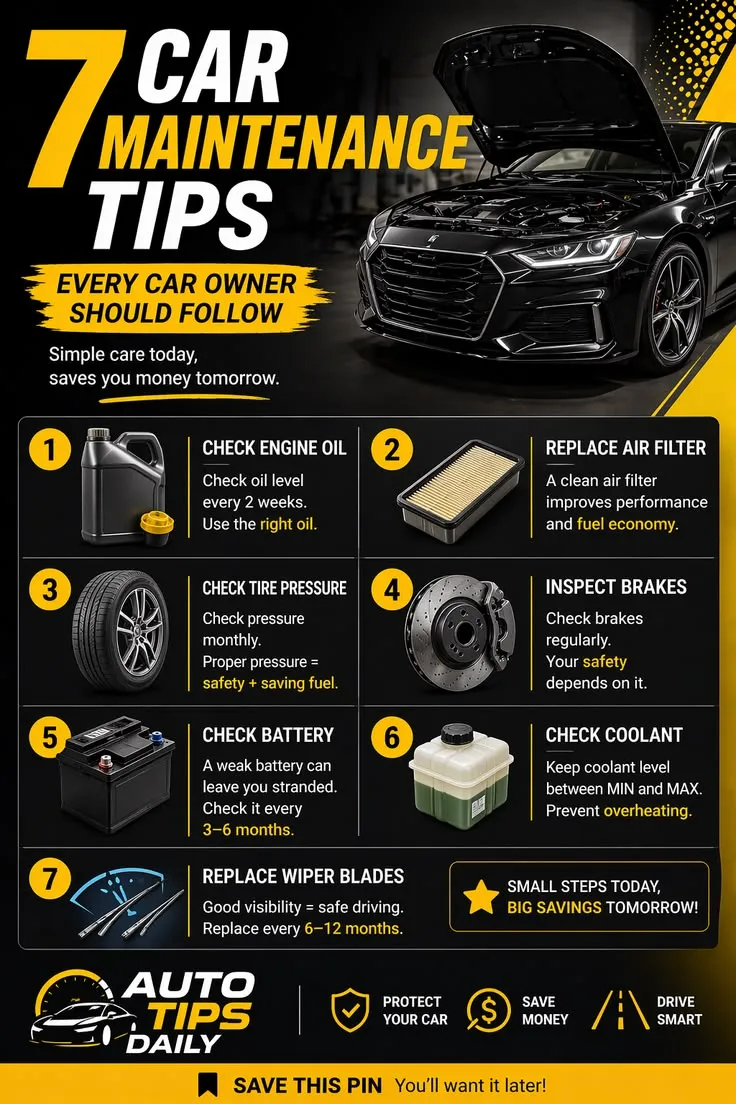
Check and Change Engine Oil Regularly
Engine oil is one of the most important components for maintaining a car’s engine health. It lubricates moving engine parts, reduces friction, and helps control heat.
Over time, engine oil becomes less effective because it collects dirt and loses its protective properties. Driving with old or insufficient oil can increase engine wear and affect performance.
Car owners should regularly check oil levels and follow the recommended oil change schedule provided by the manufacturer.
Using the correct type of engine oil is also important because different engines require specific oil specifications.
Maintain Tire Condition and Pressure
Tires are directly connected to vehicle safety, fuel efficiency, and driving comfort. Proper tire maintenance helps improve handling and reduces the risk of accidents.
Checking tire pressure regularly is one of the easiest maintenance tasks beginners can perform. Incorrect tire pressure can lead to uneven wear, reduced fuel efficiency, and poor vehicle control.
Car owners should also inspect tires for signs of damage, cracks, or excessive wear.
Rotating tires at recommended intervals helps ensure even wear and extends tire life. Properly maintained tires provide better performance and safer driving conditions.
Take Care of the Car Battery
The battery provides electrical power needed to start the engine and operate various vehicle systems. A weak or damaged battery can cause starting problems and electrical failures.
Regularly checking the battery condition helps prevent unexpected issues. Car owners should ensure battery terminals remain clean and properly connected.
Extreme temperatures can affect battery performance, so additional attention may be required during very hot or cold weather conditions.
Replacing an old battery at the appropriate time helps maintain reliable vehicle operation.
Check Important Fluids Regularly
Apart from engine oil, several other fluids are necessary for proper vehicle functioning. These fluids support different systems and help maintain performance.
Important vehicle fluids include coolant, brake fluid, transmission fluid, and windshield washer fluid.
Coolant helps regulate engine temperature and prevents overheating. Brake fluid supports proper braking performance, while transmission fluid helps the gearbox operate smoothly.
Checking fluid levels regularly and replacing them according to manufacturer recommendations helps prevent mechanical problems.
Maintain the Braking System
The braking system is one of the most important safety features of any vehicle. Proper brake maintenance ensures the car can stop effectively when needed.
Drivers should pay attention to warning signs such as unusual noises, reduced braking performance, vibrations, or a soft brake pedal.
Brake components naturally wear over time, and timely inspection helps identify problems before they become dangerous.
Regular brake checks provide better safety and improve overall driving confidence.
Replace Air Filters When Needed
Air filters prevent dust, dirt, and other particles from entering the engine. A clean air filter helps the engine receive proper airflow and operate efficiently.
Over time, filters become clogged, which can affect engine performance and fuel efficiency.
Replacing air filters according to the recommended schedule is a simple maintenance step that supports better vehicle performance.
Cabin air filters should also be checked because they help improve air quality inside the vehicle.
Keep the Car Clean and Protected
Cleaning a car is not only about appearance; it also helps protect the vehicle from damage.
Regular washing removes dirt, dust, and harmful substances that may affect the paint and body over time. Cleaning the interior prevents unpleasant smells and protects materials from damage.
Protecting the car from excessive sunlight, moisture, and environmental conditions can help maintain its appearance and value.
A clean and well-maintained car also creates a more comfortable driving experience.
Pay Attention to Warning Signs
Modern vehicles provide warning indicators to alert drivers about potential problems. Ignoring these signals can lead to serious damage.
Dashboard warning lights should never be ignored. They often indicate issues related to the engine, battery, brakes, or other important systems.
Unusual sounds, vibrations, reduced performance, unusual smells, or changes in driving behavior should also be checked.
Early attention to warning signs can prevent expensive repairs and improve safety.
Follow a Regular Service Schedule
Regular servicing is one of the most effective ways to maintain a car properly. Professional inspections help identify problems that may not be visible during basic checks.
During servicing, technicians inspect important components, replace necessary parts, and ensure that the vehicle is operating correctly.
Following a service schedule based on mileage or time helps maintain consistent performance and reliability.
Skipping scheduled maintenance may save money temporarily but can result in higher repair costs later.
Practice Good Driving Habits
Driving habits have a major impact on vehicle condition. Smooth and responsible driving can reduce wear and improve the lifespan of various components.
Avoiding sudden acceleration, harsh braking, and unnecessary overloading helps reduce stress on the engine, brakes, and suspension system.
Allowing the engine to warm properly and following safe driving practices contribute to better vehicle health.
Good driving habits combined with regular maintenance create a more reliable and efficient car.
Keep Emergency Supplies in Your Car
Being prepared for unexpected situations is an important part of car ownership.
Keeping basic emergency supplies such as a first-aid kit, flashlight, tire repair tools, and essential documents can be helpful during travel.
A spare tire and basic knowledge of changing a tire can also provide support during emergencies.
Preparation improves safety and reduces stress when unexpected situations occur.
Conclusion
Maintaining a car properly does not require advanced mechanical knowledge. Simple habits such as checking fluids, maintaining tires, following service schedules, monitoring warning signs, and driving responsibly can make a significant difference.
Regular car maintenance improves safety, performance, fuel efficiency, and vehicle lifespan. For beginners, developing a consistent maintenance routine is the best way to protect their investment and enjoy a reliable driving experience.
A car is a valuable asset, and proper care ensures it continues to provide comfort, convenience, and dependable performance for many years.