Natural Ways to Lower Blood Pressure: Daily Habits for a Healthier Heart
High blood pressure places continuous strain on the heart and blood vessels, raising long-term risks for heart disease, stroke, and other complications. While medication remains essential for many, daily lifestyle habits can meaningfully reduce readings and support overall cardiovascular health. These natural approaches work by improving vascular function, reducing fluid retention, strengthening the heart, and easing systemic stress. Consistent application of several strategies often produces the greatest benefit, sometimes lowering systolic pressure by several points within weeks to months.
Reduce Sodium Intake Throughout the Day
Excess sodium causes the body to retain fluid, increasing blood volume and pressure against artery walls. Most people consume far more than recommended, largely from processed foods, restaurant meals, soups, sauces, deli meats, and packaged snacks rather than the salt shaker. Aim for less than 2,300 milligrams daily, with an ideal target of 1,500 milligrams for many adults with elevated readings. Reading labels, choosing low-sodium versions of common products, cooking more meals at home, and flavoring food with herbs, spices, citrus, or vinegar instead of salt can produce measurable drops. Reducing intake by about one teaspoon of salt equivalent has been linked to systolic reductions comparable to some first-line medications in many individuals.
Follow a Heart-Supporting Eating Pattern
A diet centered on whole, nutrient-dense foods helps regulate blood pressure more effectively than isolated changes. The Dietary Approaches to Stop Hypertension (DASH) pattern emphasizes fruits, vegetables, whole grains, low-fat or fat-free dairy, lean proteins such as fish and poultry, beans, nuts, and seeds while limiting saturated fat, red meat, sweets, and sugary drinks. This approach can lower systolic blood pressure by as much as 11 mm Hg in people with hypertension. Potassium-rich foods play a key supporting role because potassium encourages the kidneys to excrete sodium and helps relax blood vessel walls. Good everyday sources include bananas, potatoes, leafy greens, beans, yogurt, oranges, and tomatoes. Aiming for several servings of produce daily and increasing overall potassium intake toward recommended ranges complements sodium reduction. A Mediterranean-style pattern that prioritizes similar plant foods, olive oil, and fish offers comparable benefits.
Move Regularly to Strengthen the Heart
Physical activity improves the heart’s efficiency so it pumps blood with less effort, reducing pressure on arteries. Aim for at least 150 minutes of moderate-intensity aerobic activity each week—brisk walking, cycling, swimming, or similar—or 75 minutes of vigorous activity. Spreading this across most days, such as 30 minutes five times a week, works well. Even shorter bouts, including three 10-minute walks, contribute. Strength training on at least two days weekly further supports vascular health. Isometric exercises, such as sustained wall sits or handgrip holds, have shown particularly strong effects in some analyses. Consistency matters more than intensity at the start; any regular movement is better than none, and benefits accumulate as fitness improves. Consult a healthcare professional before beginning a new program, especially if readings are significantly elevated.
Reach and Maintain a Healthy Weight
Extra body weight, particularly around the waist, increases the workload on the heart and raises blood pressure. Losing even a modest amount—five to ten percent of body weight or roughly one kilogram—can lower systolic pressure by about one mm Hg per kilogram lost. Combining calorie awareness with the DASH-style eating pattern and regular activity produces sustainable results. Monitoring waist circumference alongside overall weight provides useful feedback, as excess abdominal fat correlates strongly with higher readings. Gradual progress of one to two pounds per week supports long-term success without extreme restriction.
Limit Alcohol and Avoid Tobacco
Alcohol can raise blood pressure over time, even in moderate amounts for some people. Limiting intake to no more than one drink per day for women and two for men—or less—helps. Choosing not to drink at all offers the clearest benefit for blood pressure control. Tobacco use damages blood vessels and elevates pressure both immediately and chronically; quitting produces rapid and lasting improvements in cardiovascular function. Avoiding secondhand smoke further protects vessel health.
Manage Daily Stress and Prioritize Rest
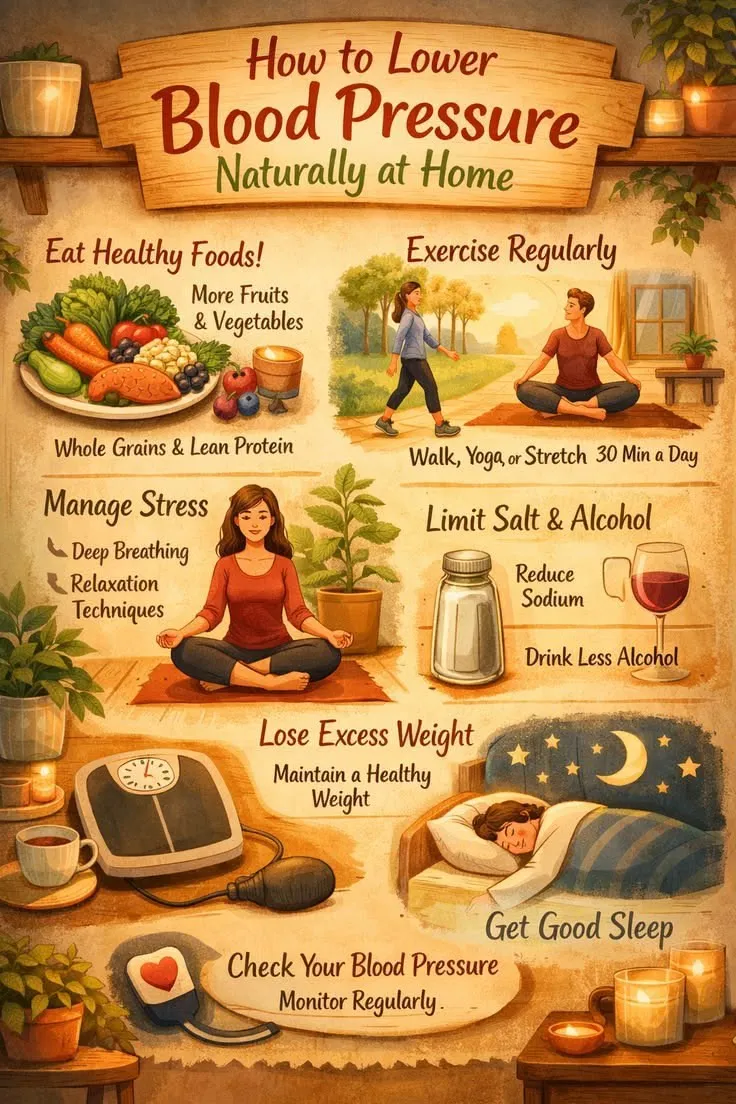
Chronic stress triggers hormones that temporarily constrict blood vessels and elevate heart rate. Over time this pattern contributes to sustained higher pressure. Simple daily practices such as deep breathing for a few minutes morning and evening, short meditation sessions, yoga, or tai chi help calm the nervous system. Listening to calming music while practicing slow breaths can also lower readings in the moment. Quality sleep of seven to nine hours nightly supports healthy blood pressure regulation. Maintaining a consistent sleep schedule, even on weekends, and addressing issues such as sleep apnea when present strengthen these effects.
Build Sustainable Daily Routines
The most effective approach combines several habits rather than relying on one change. Start the day with a nutrient-rich breakfast aligned with DASH principles, incorporate movement early or during breaks, prepare home-cooked meals with minimal added salt, and end the evening with a brief relaxation practice. Track progress with home blood pressure measurements taken at consistent times, sharing results with a healthcare provider. Small, repeated actions—choosing produce over processed snacks, walking after meals, reading labels—compound into meaningful reductions.
These daily habits address the root contributors to elevated blood pressure: excess sodium and fluid volume, vascular stiffness, excess weight, and chronic stress. Many people experience noticeable improvements within weeks when multiple strategies are followed together. Results vary by individual factors, and lifestyle changes work best alongside professional medical guidance, especially when readings remain high or other conditions are present. By integrating these practices into ordinary routines, it becomes possible to support a healthier heart, lower pressure readings, and reduce long-term cardiovascular risk through consistent, evidence-aligned choices.
Read more – topstablegames.com