Why North India’s Cotton Belt Is Shrinking Fast
North India’s traditional cotton belt, spanning parts of Punjab, Haryana and Rajasthan, is contracting at a notable pace. Acreage across the three states has fallen by roughly 23 percent in a single season, dropping from about 11.83 lakh hectares to around 9.09 lakh hectares. Punjab has recorded the steepest decline, with cotton area plunging from approximately 1.28 lakh hectares to an all-time low of nearly 80,000 hectares. The shift reflects a combination of biological, economic and infrastructural pressures that have made the crop far less attractive to farmers than it once was.
The Scale of the Decline
The northern cotton zone once formed a significant contributor to India’s overall output. Over the years, however, the area under the crop has steadily eroded. In Punjab, the traditional belt covering Bathinda, Mansa, Muktsar Sahib, Fazilka, Faridkot, Ferozepur and adjoining areas has seen progressive conversion to other crops. Haryana has experienced a parallel reduction, with acreage falling from earlier peaks above six lakh hectares to well under three lakh hectares in recent seasons. Rajasthan has also registered losses, though the intensity varies across districts.
This contraction is not a short-term fluctuation. It accelerated after major pest outbreaks and has continued as farmers recalibrate their cropping choices in response to risk and returns.
Why Farmers Are Moving Away from Cotton
Several interlocking factors explain the exodus. The most immediate is the rising risk associated with pest attacks and the resulting yield losses. Cultivation costs have climbed because of heavier pesticide use, while market prices have often remained uncertain or below levels that guarantee comfortable margins. In contrast, paddy offers assured procurement at minimum support prices, an extensive mandi network, relatively timely payments and, in many areas, the advantage of subsidised or free electricity for irrigation.
Improved access to groundwater through additional tubewell connections has further facilitated the switch. Regions that earlier relied on cotton partly because irrigation was limited now find it feasible to grow water-intensive paddy. The income security of rice has outweighed the historical familiarity and agronomic suitability of cotton for many cultivators. Yields that once ranged between eight and twelve quintals per acre have in many places fallen to five to seven quintals or even lower, rendering the crop economically unviable when input costs are factored in.
The Pink Bollworm Challenge
Central to the crisis is the pink bollworm, scientifically known as Pectinophora gossypiella. This insect is a late-season pest whose larvae bore into cotton bolls, damaging the developing fibre and seeds. Unlike some other bollworms that feed on multiple crops, the pink bollworm is largely monophagous—it depends almost exclusively on cotton. This specialised feeding habit has important consequences for resistance management.
In the northern zone, serious pink bollworm pressure intensified after 2021, following earlier problems with whitefly in 2015. Continuous exposure to the same insecticidal proteins produced by Bt cotton allowed resistant populations to build up and eventually dominate. Once resistance became widespread, the protective advantage that Bt hybrids once provided largely disappeared. Farmers responded by increasing chemical sprays, yet yields continued to suffer and cultivation costs rose.
Why Bt Cotton Lost Its Edge
Bt cotton, introduced in India in the early 2000s and later upgraded to dual-gene Bollgard II versions, initially delivered substantial benefits. The technology incorporated genes from the soil bacterium Bacillus thuringiensis that enabled the plant to produce proteins toxic to certain bollworms. For a period, this reduced the need for insecticide applications and supported higher productivity.
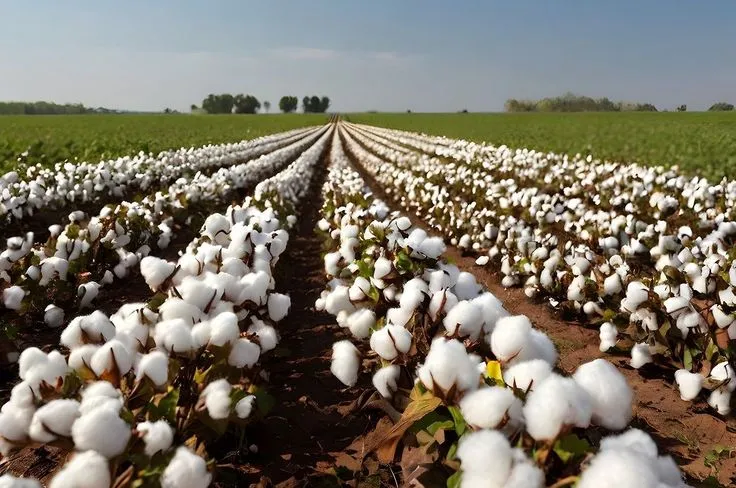
Over time, however, the pink bollworm developed resistance to the Cry1Ac and Cry2Ab toxins expressed in the widely grown hybrids. Because the pest feeds almost only on cotton, selection pressure was intense and continuous. Inadequate planting of non-Bt refuge crops in some areas is believed to have accelerated the process. By the mid-2010s resistance was already evident in central and southern zones; it later established itself firmly in the north. The result is that the same hybrids that once offered reliable protection now require heavy supplementary pesticide use, eroding both the economic and environmental gains originally associated with the technology.
Optimal Conditions for Growing Cotton
Cotton is a tropical and subtropical crop that thrives under specific climatic and soil conditions. It requires uniformly high temperatures, ideally between 21°C and 30°C during the growing season, with an optimum range of roughly 21–27°C for vegetative growth. The plant can tolerate higher temperatures for short periods if soil moisture is adequate, but growth is retarded below about 20–21°C. A frost-free period of at least 210 days is essential.
Rainfall needs typically fall in the 50–100 cm range. Adequate moisture at the beginning supports germination and early growth, while dry, sunny weather during boll opening and picking is critical to avoid fibre damage and secondary pest or disease problems. Cotton is sensitive to waterlogging and prefers well-drained soils. Deep black soils (regur) of the Deccan and central regions are particularly suitable because of their moisture-retentive properties, while alluvial soils in the northern plains and certain red and mixed soils in the south also support cultivation. The crop is semi-tolerant of salinity but exhausts soil fertility relatively quickly, making nutrient management important.
In the northern zone, cotton is grown as an irrigated crop sown mainly in April–May and harvested by November, often followed by wheat. The combination of rising pest pressure, climate variability and more attractive alternatives has disrupted this long-standing system.
Looking Ahead
The shrinking of North India’s cotton belt illustrates how biological resistance, economic incentives and infrastructural change can rapidly alter cropping patterns. Restoring confidence in cotton will require more than incremental pesticide adjustments. It will depend on the availability of improved genetics that address current resistance, better integrated pest-management practices, reliable market support and agronomic packages suited to evolving climate conditions. Until those elements come together, many farmers in the traditional belt are likely to continue favouring crops that offer greater certainty of return.
Read more – therecipetaste.com , uuploadarticle.com