Trump’s Fed Threat Signals Trade Pressure and Risks for India
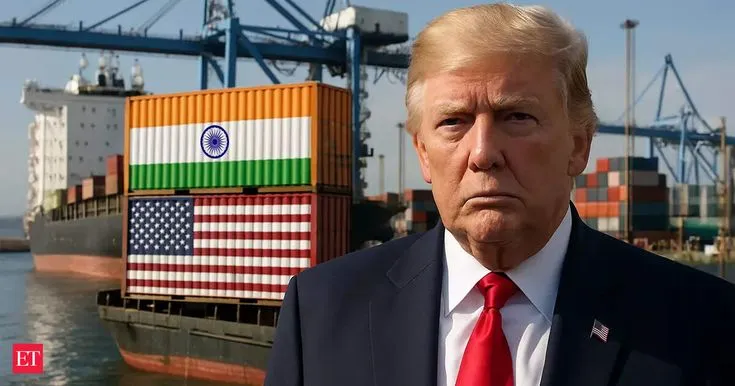
US President Donald Trump’s recent threat to halt trade with countries running surpluses against the United States unless the Federal Reserve cuts interest rates marks an unusual escalation in the long-running tension between the White House and the central bank. The statement links two distinct policy domains—monetary policy and international trade—in a way that has raised questions about institutional independence, global economic stability and the specific pressures facing key Indian sectors. As Washington intensifies demands for lower bilateral trade deficits, expanded market access and reduced dependence on China, India finds itself navigating growing challenges for farmers, exporters, energy procurement and the textile industry.
The Nature of the Unusual Threat
In early September 2026, Trump publicly demanded that the Federal Reserve lower borrowing costs to the lowest level of any country in the world. He warned that failure to do so could lead him to stop trading with nations that maintain trade deficits with the United States. The president framed the move as a legitimate exercise of executive authority over trade, citing previous legal interpretations of presidential powers in tariff matters. He also praised the newly appointed Fed chair while simultaneously pressing the broader board to act as “patriots.”
The threat stands out because it explicitly connects domestic interest-rate decisions to international commercial relations. Central banks traditionally set policy based on inflation, employment and growth indicators, independent of political directives on trade balances. By tying rate cuts to the possibility of severing trade flows, the administration has introduced a new layer of uncertainty into both financial markets and diplomatic relations with major trading partners.
What the Threat Signals
The episode reinforces a pattern of sustained pressure on Federal Reserve independence. Throughout the current administration, public criticism of rate decisions, attempts to influence board composition and repeated calls for lower borrowing costs have tested the traditional separation between political leadership and monetary authority. The latest statement goes further by weaponising trade policy as a potential lever against the central bank.
It also signals a broader strategic posture: the United States remains focused on shrinking bilateral trade deficits, securing greater access for American goods and services, and accelerating efforts to reduce reliance on Chinese supply chains. Countries that run consistent surpluses with the US, or that continue to source critical inputs from China, face heightened scrutiny. Trade policy, tariff tools and market-access negotiations are being used in concert with domestic economic messaging.
For global markets, the risk is that such rhetoric could complicate central-bank decision-making, heighten volatility in currency and bond markets, and encourage other governments to respond with their own protective measures. Even if the threat remains largely rhetorical, it underscores the administration’s willingness to blur institutional boundaries when pursuing its economic objectives.
Why the Developments Matter to India
India maintains a significant goods trade surplus with the United States and has become an important partner in discussions around supply-chain diversification away from China. At the same time, New Delhi faces persistent American demands for lower tariffs on agricultural and industrial products, larger purchases of US energy and technology goods, and stricter controls on inputs that may be linked to Chinese supply chains.
Three interconnected pressures stand out. First, market-access negotiations have focused heavily on opening Indian agriculture and certain manufacturing sectors. Second, investment and procurement patterns are shifting as the US seeks to re-shore or friend-shore production. Third, expectations around reducing Chinese content in Indian exports have intensified, with concerns in Washington about possible transshipment or indirect sourcing that could undermine US efforts to limit Beijing’s economic reach.
Pressure on Farmers and Agricultural Livelihoods
Agricultural market access remains one of the most sensitive issues. American negotiators have sought greater openings for products such as apples, cotton, grapes, oranges, soybeans, walnuts and other items. Indian farmer groups have repeatedly warned that lower customs duties on these goods would expose domestic producers to intense competition from subsidised or higher-productivity US farms. Given the political weight of rural constituencies and the large share of the population dependent on agriculture, any concessions in this area carry substantial domestic risks.
Challenges for Exporters and the Textile Sector
Indian exporters, particularly in textiles and apparel, have already experienced significant disruption from successive rounds of US tariffs. The sector employs millions and relies heavily on the American market. Rising cotton yarn prices—reported to have increased substantially in recent months—have squeezed margins for manufacturers and exporters. Industry associations have sought government intervention to stabilise yarn availability and prices so that apparel units remain competitive.
Any further tightening of trade conditions, whether through higher tariffs, stricter rules of origin, or demands linked to Chinese content, would compound these difficulties. Exporters must simultaneously manage cost pressures, diversify markets and adapt to evolving compliance requirements.
Energy Imports and Strategic Balancing
Energy trade has emerged as another focal point. India has increased purchases of US liquefied petroleum gas and other energy products, in some periods accounting for a sharply higher share of imports. While this diversification reduces reliance on other suppliers, it also raises questions about long-term pricing, volume commitments and the balancing of energy security with foreign-policy considerations. Washington has linked energy purchases to broader trade discussions, creating additional leverage points.
Broader Implications and the Path Ahead
Trump’s threat to the Federal Reserve is more than a domestic political statement. It illustrates a willingness to use trade as an instrument of pressure across multiple domains. For India, the combination of deficit-reduction goals, market-access demands and China-related supply-chain expectations creates a complex negotiating environment. Farmers face potential competition, textile and other exporters confront cost and market-access headwinds, and energy procurement is being reshaped by strategic and commercial incentives.
Navigating these pressures will require careful calibration. India must protect sensitive domestic sectors while seeking stable and predictable access to the US market, and it must manage energy and input sourcing in a way that balances security, cost and geopolitical realities. The unusual linkage between monetary policy and trade policy in Washington adds a further layer of uncertainty that Indian policymakers and businesses will need to monitor closely in the months ahead.
Read more – amazonsalesday.org